I have mentioned before that I have recently found pleasure and pleasant distraction in the use of pastels (and also pen, ink and charcoal) to approximate my landscape photographs on paper—the same photographic images you have seen here (or at Fragments from Floyd) over the decades.
I find it especially meaningful and rewarding, with a soft pastel or charcoal, to immerse myself in the details of a place I know so well from memory—places that are the stories of my life.
Two such renderings appear below, both from Southwest Virginia in Floyd County and Patrick County, Virginia. I remember the day the photos were taken. I remember the winter chill, the smell of cold, the alone-ness standing against the wind with my iPhone of the day.
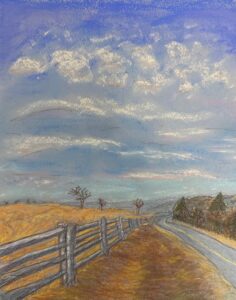
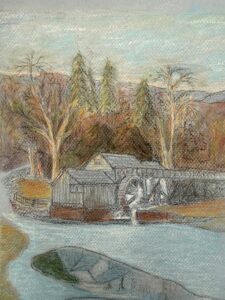
BUT IS IT CHEATING?
Now this is the “issue” I have as I continue to explore both the medium and the method. At 77 and a first-time “artist,” I cannot expect to gain much skill for accuracy in proportion, perspective or placement of the line details that form the basis for the things I want to reproduce.
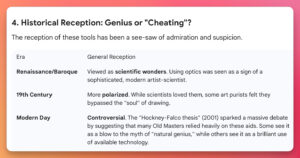
As I began to grapple with the frustration of distortion and inaccuracy, I first encountered in fully free-hand pastels like the couple I have shown here before, I began learning that even the early masters struggled with these same concerns.
Enter the Camera Obscura, then the Camera Lucida. The needs of artists and scientists over the years have found solutions with the use of optical tools that allow for lines on the page to “line up” with those in a real-life eye-view of a village, flower structure or nebula (John Herschel and others.)
THE TOOL IN MY POCKET
So the solution I have discovered and adopted to address my inadequacies is called Da Vinci Eye. It is a smartphone app that works by Augmented Reality, showing both the image to be recreated like any other image in your photo collection while also showing that same image ghost on the canvas or paper, allowing the lines of the image to be accurately drawn with precision on the page.
[For the two pastels above, I spent maybe 15 minutes each getting the lines right using the app, and another two hours or more adding secondary elements and fleshing out the colors as realistically as I could render with the artist’s tools at hand.]
In use, the camera is supported up off the drawing surface by means as simple as placing the camera on a tall cup. However, I recommend spending the money to get the “official” stand that holds the phone magnetically on an adjustable arm. If you’re interested in knowing more, leave a comment and I’ll tell you what I know.
SO HOW DO I CONFESS?
So I am not showing my finished pastels shown up top to anyone but YOU until I figure out how to admit my deficiencies and my crime of passion on each image where my cheating tool has been used.
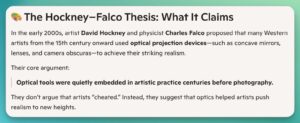
I am inclined to be vocal about this and share it readily with the others in this elder-commuity with similar interests (and similar frustrations) as a way to achieve successes with their art that will make them enthused and encouraged and persistent to learn to draw without the crutch of augmented reality. Should we live so long.
What would you do in this situation? Should I say nothing and take credit for skills I don’t possess? Pile up finished artwork in a dark place that the kids will find when I’m gone? Create for my own purposes and pleasure and let the judgement of others fall as it may?
 – Fred First is an author, naturalist, photographer watching Nature under siege since the first Earth Day. Cautiously hopeful. Writing to think it through. Thanks for joining me. Subscribe to My Substack HERE.