Over the next four years, Virginia Tech’s counselor education program is poised to fill a critical need for mental health professionals in areas of Virginia that need them most.
The program has received a $1.4 million grant from the Health Resources and Services Administration (HRSA) to expand the number of qualified mental health professionals serving children, adolescents, and young adults across Southwest Virginia. To do that, Virginia Tech will focus on training counselors specifically to work within underserved communities.
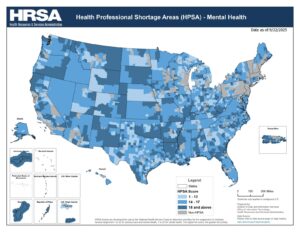
According to the HRSA, Virginia is considered a mental health professional shortage area. The agency uses a scoring system to evaluate an area’s needs based on factors such as population-to-provider ratio, percentage of population below the federal poverty level, and travel time to the nearest sources of care. Scores range from zero to 25, with some areas in Southwest Virginia ranking as high as 22 — among the most severe shortages in the state.
As part of the four-year grant, seven Virginia Tech master’s degree students who work with underserved populations during their internships and plan to continue to work with those communities after graduation, will receive a $25,000 fellowship. They also will receive funding to attend conferences and participate in professional development opportunities, allowing them to network and learn from leaders in the field.
“Our proposal demonstrated how dire the shortage of school counselors and mental health professionals is, and that’s part of why we were selected,” said Laura Welfare, professor of counselor education. “This grant is wonderful because it helps the student maybe not have to work as many hours at their part-time job on top of full-time grad school and internship.”

For students like Ashley Wyatt, the grant is more than financial support — it’s a chance to serve the communities that shaped her. Wyatt grew up in Russell County, which has a HPSA score of 17. She is an intern at Radford University Carilion in Roanoke, where she works with students who are preparing to enter the medical field. The administration designates Roanoke as a low-income health processional shortage area, with a HPSA score of 16.
“Growing up in a rural Appalachian community, I’ve seen firsthand how often these areas feel forgotten when it comes to resources and mental health care,” said Wyatt. “This grant not only eases some of the financial burden for me as a student, but it also allows me to focus on training to be the kind of counselor who can go back and serve the people I love. For me, it’s about giving back to the communities that raised me and showing them they aren’t invisible. They matter and deserve quality care.”
Early intervention changes the story
Abbey Lynch is another student selected to be a part of this grant. She is an intern in Roanoke City Public Schools. She said working in a school setting has opened her eyes to the importance of educating students about mental health services early on in life.
“Being in a school is an opportunity to meet these students where they are and help them climb the ladder. That’s why I’d like to work with underprivileged students, because they are limited in the resources and support they have,” said Lynch. “If I can help be a small part of motivating students that they are more than the barriers they are facing, that has value.”
Gerard Lawson, professor in the counselor education program, said the challenges that adults in underserved communities face, such as limited access to care and higher rates of addiction, have a ripple effect on children and their mental health. This further underlines the importance of the grant’s focus on early intervention, he said.
“We want them to go beyond asking, ‘Am I going to be able to be successful in high school or not?’ If we can intervene sooner, that’s not the question. The question is: what kind of productive career do you want?” said Lawson. “That takes deliberate effort and it doesn’t happen by accident. We’ve got to be strategic about being sure that those young people from that kind of background and those kinds of experiences get the right support at the right time with the right people, and that’s part of what this grant is designed to do.”
Cultivating community
Expanding the mental health workforce in underserved areas requires more than preparing future counselors. It also demands creative strategies to make care accessible and to retain professionals working in these communities.
Joanna Collins, assistant professor of practice in the counselor education program, is the director of the mental health clinic at the Virginia Tech Roanoke Center. The clinic gives Virginia Tech counselors-in-training hands on experience by serving clients from local organizations, such as the Rescue Mission of Roanoke and the Roanoke Diversity Center.
During the 2024–25 academic year, students provided more than 5,400 hours of pro bono counseling, hundreds of which came through the Roanoke clinic. That’s an estimated $324,000 in free mental health services.
As a part of the grant, Collins works with current sites where interns are placed, such as Anderson Treatment, SARA Roanoke, and HopeTree Family Services in Salem. She identifies new sites in rural and high-need areas. She plays an important role in integrating behavioral health care into primary care settings, one of the grant’s key objectives. She’ll be offering interdisciplinary training sessions to mental health providers as well as other medical and education professionals.
“We want to work across lines to tackle mental health in rural areas. Staying in our own silos isn’t effective for the people that we want to serve,” said Collins.
Lawson will provide additional free training for clinical supervisors to ensure Virginia Tech students are receiving proper support as they enter the field. He said he’ll be “tilling the soil” for students and partnering with local providers who work in underserved communities to ensure they’re ready to welcome new counselors into the field so that students have somewhere to land after graduation. That’s a step, he said, that is crucial to building and retaining a sustainable workforce.
“I’m hoping that Virginia Tech and the skills that these students have are palpable and visible in the community every day, so that it’s hard to miss what a difference they’re making,” he said. “We know they can make a tremendous difference.”
By Samantha Palmer