As the warning label on every pack of cigarettes tells us, smoking is harmful. It’s the leading preventable cause of death, disease and disability.
And yet, nearly 15 percent of adults in the United States still smoke.
“Most indicate they want to quit,” said Jeff Stein, an addiction researcher and assistant professor with Virginia Tech’s Fralin Biomedical Research Institute at VTC. “But knowing that smoking affects your health isn’t enough to motivate people. The future is just too abstract and often doesn’t feel real.”
If it’s a choice between the immediately rewarding effects of smoking and being able to avoid lung cancer, heart disease, and emphysema, Stein said, too many people are choosing smoking.
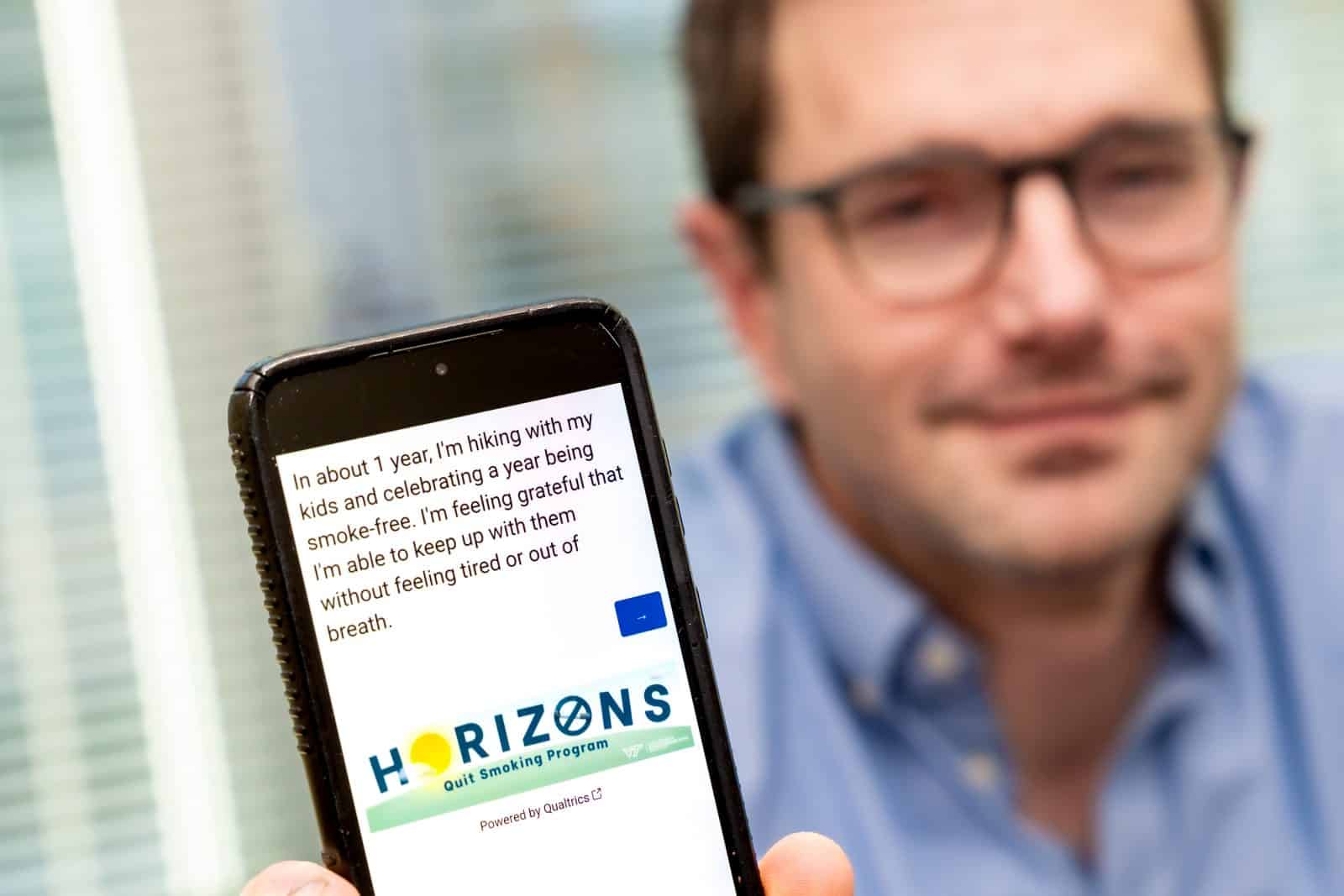
But what if they could coach themselves to put more value on the long-term health benefits of quitting? Stein aims to find out in a study funded by a grant from the National Cancer Institute of the National Institutes of Health.
The project’s goal is to help people quit smoking by testing different versions of an intervention known as episodic future thinking (EFT), which aims to reduce impulsivity and promote healthier choices by guiding people to think about their personal future often and in concrete detail.
Previous research at the Fralin Biomedical Research Institute points toward EFT as a behavioral intervention that can make short-term temptations a lot less appealing and positively impact a range of substance use disorders and other addictive behaviors.
The fully remote, preliminary study will examine the effectiveness and feasibility of different approaches for 128 participants from across the United States, with half representing urban and half rural areas. All participants will also receive counseling and nicotine patches to help quit smoking. Stein anticipates his lab will begin recruiting for the study in January.
Co-investigators include Allison Tegge, a research associate professor with the Fralin Biomedical Research Institute, and Christine Sheffer, a professor with the Roswell Park Comprehensive Cancer Center in Buffalo, New York.
Stein is also interim co-director of the FBRI Center for Health Behaviors Research and holds an appointment in Virginia Tech’s Department of Human Nutrition, Foods and Exercise in the College of Agriculture and Life Sciences.
To be notified when the lab begins recruiting for the study, visit fralinbiomed.info/steinlab.