Cancer researchers are making strides in efforts to use genetic profiling to develop a more precise understanding of the response to treatment of acute myeloid leukemia (AML), a rare but aggressive blood cancer.
In the most recent of a series of four studies featured in Bone Marrow Transplantation, researchers have found that a highly sensitive DNA-based test can help doctors predict which patients with AML are most likely to relapse.
AML is an aggressive blood cancer, and about 30 percent of adults with the disease have a mutation in a gene called NPM1. Many of these patients undergo an allogeneic stem cell transplant — a procedure that replaces diseased bone marrow with healthy donor cells — but relapse remains a major concern.
The research team analyzed blood samples from 190 patients with AML in clinical remission. The samples, stored in a national biobank of those who had received transplants between 2013 and 2019, were tested using a next-generation DNA sequencing test that detects tiny traces of persistent NPM1 mutation.
These traces are known as measurable residual disease.
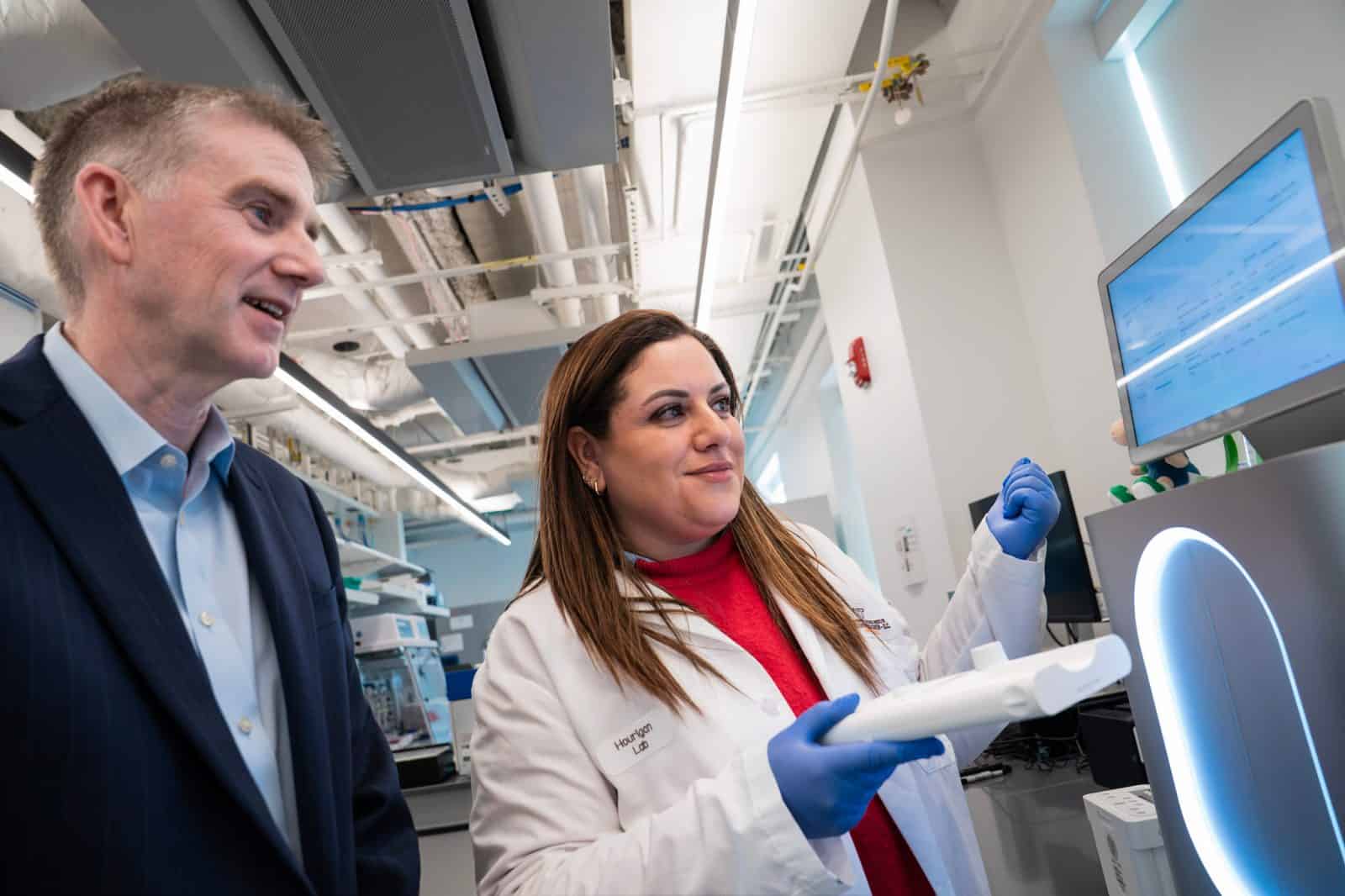
First authors Rasha Al-Ali, a doctoral student in Virginia Tech’s Translational Biology, Medicine, and Health Graduate Program, and Gege Gui, a research scientist with the Fralin Biomedical Research Institute, led the study, with senior author Christopher Hourigan, a professor at the institute and director of its Cancer Research Center in Washington, D.C.
Patients who tested positive for this mutated NPM1 signal before transplant were three to four times more likely to relapse after the transplant and had significantly lower survival rates compared to those who tested negative.
Even very small amounts — likely representing fewer than one in 10,000 cells — were linked to worse outcomes. The higher the level of measurable residual disease, the greater the risk. Patients with the highest levels had only a 27 percent chance of surviving three years after transplant.
The research was conducted as part of the Pre-MEASURE study, a collaboration between the Hourigan laboratory and the National Marrow Donor Program’s Center for International Blood and Marrow Transplant Research.
The work was carried out within the Foundation for the National Institutes of Health Acute Myeloid Leukemia Measurable Residual Disease Biomarkers Consortium, also led by Hourigan. The consortium brings together researchers from Virginia Tech, Dana-Farber Cancer Institute of Harvard Medical School, and Fred Hutch Cancer Center, along with representatives from the U.S. Food and Drug Administration and more than 20 pharmaceutical and medical diagnostics companies.
The research was also supported by the Intramural Research Program of the National Heart, Lung, and Blood Institute at the National Institutes of Health and the Red Gates Foundation.
Since the initial Pre-MEASURE findings were published in JAMA in 2023, the research team has expanded its work to evaluate how commercially available tests perform and to assess less common genetic mutations as potential markers of measurable residual disease. Together, the studies have focused on tailoring genetic testing to the specific mutation present in a patient’s leukemia.
“Large, carefully designed studies are essential for systematically improving the standards in how we monitor and treat this rare disease,” said Hourigan, who is also a faculty member at the Virginia Tech Carilion School of Medicine. “Some genetic markers may appear promising, but without strong evidence they can be misleading. Precision medicine depends on building a solid foundation so these powerful technologies can be used responsibly.”
Hourigan is now leading a prospective follow-up study, again in partnership with the Center for International Blood and Marrow Transplant Research, to validate and help implement these findings at 18 major cancer centers across the United States. Results from the nationwide study, known as MEASURE, are anticipated later this year.
Original study: 10.1038/s41409-025-02757-1
By John Pastor