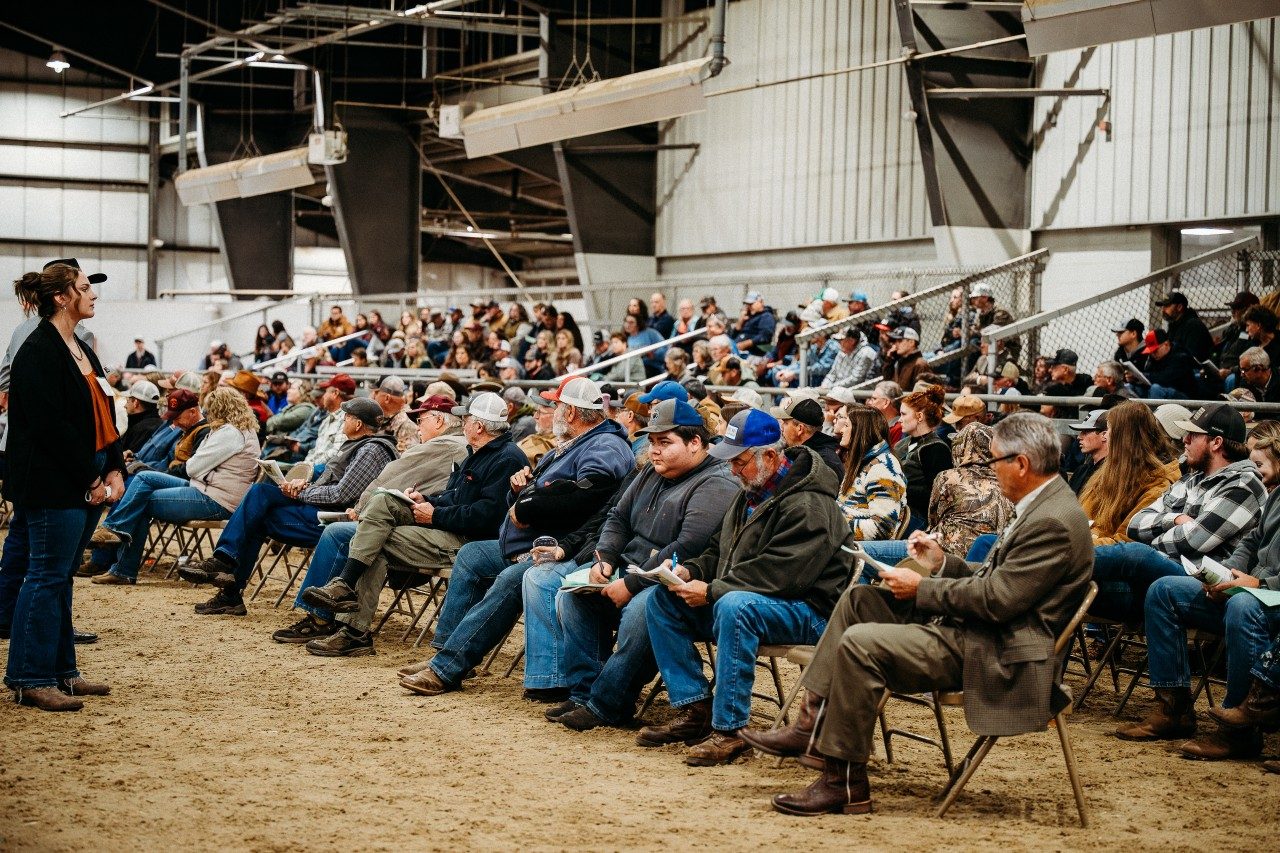
The auctioneer’s chant filled the Alphin-Stuart Livestock Arena as more than 100 buyers packed the stands, eyes fixed on video screens showing cattle up for bid.
Students scanned the crowd, signaling offers and recording sales. Behind the scenes, classmates tracked online bids and coordinated logistics from serving food to loading cattle onto trailers.
For students in the Livestock Merchandising class, the Hokie Harvest Sale is more than an auction. It’s the culmination of months of planning and one of the School of Animal Sciences’ most enduring hands-on learning traditions.
Now in its 31st year, the course has given more than 2,060 students a front-row seat to the business of animal agriculture and raised almost $4.5 million through the sale of 1,554 head of cattle, 433 horses, and 46 swine. Proceeds go back into the School of Animal Sciences, funding teaching, research, and herd improvements that strengthen Virginia Tech’s livestock programs.
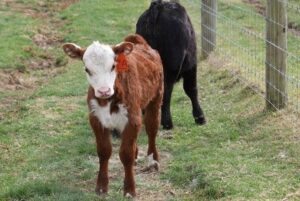
This year’s sale, held Oct. 31, set a record, generating $328,500 from 61 head of Angus, Simmental, Charolais, and Hereford cattle. More than 170 buyers took part in person and online.
“Hokie Harvest is a time when we can showcase Virginia Tech’s students, livestock, and facilities,” said Dan Eversole, associate professor and Extension beef scientist who leads the class. “It’s also a great chance to connect with alumni, friends, and buyers who’ve supported our students from the very beginning.”
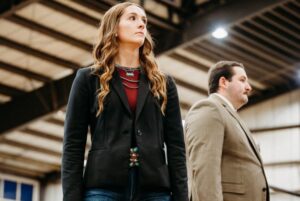
Student-run, from start to finish
Eversole launched the course in 1995 to give students full responsibility for planning and running a livestock auction. Throughout the semester, industry experts join the class to share insights on marketing, catalog design, and presenting livestock.
Students put those lessons to work on committees that handle everything from advertising and budgeting to setup, food service, and cleanup.
“This class gives students practical experience that can’t be replicated in a traditional classroom,” Eversole said. “They learn how to communicate with buyers, understand market dynamics, and appreciate the business side of beef production.”
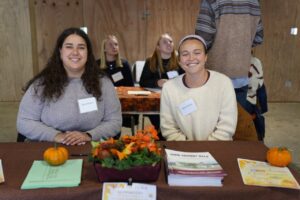
Inside the beef barn on auction day, junior Paula Ramos was registering guests. An animal and poultry sciences major who hopes to work in livestock production, Ramos said she enjoyed learning the marketing side of managing an auction.
“I actually really liked designing and creating the ads,” she said. “It made me realize how much thought goes into how you present an animal — and how to connect that with what buyers are looking for. I think that most of the principles we learn in this class can take you anywhere.”
For McKenzey Kirby, a senior raised on a farm in Mechanicsville, the class gave her a chance to reconnect with a beloved tradition.
“I grew up going to cattle auctions and I missed them,” she said. “This class was a great way to wrap up my time here with something hands-on. We get to see everything we’ve been working on all semester come together in one night.”
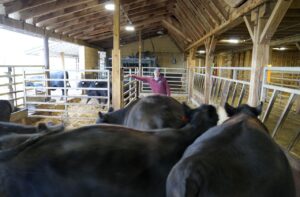
The cattle are raised at Virginia Tech’s Beef Cattle Center, a year-round teaching and research facility overseen by Eversole and managed by Chad Joines ’93, director of beef cattle operations.
Known for its high-performing herds and strong genetics, the center also supports student learning and outreach across the College of Agriculture and Life Sciences and the Virginia-Maryland Regional College of Veterinary Medicine.
A Hokie tradition
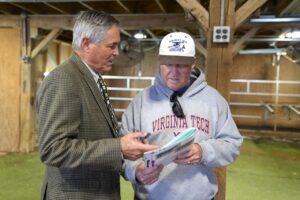
High-quality cattle and Hokie hospitality draw loyal alumni and repeat buyers year after year. Dennis Pearson ’83, a graduate of the College of Agriculture and Life Sciences and owner of Soldiers’ Hill Angus in Warrenton, has been attending the sale for more than two decades.
“I’ve done very well with the cattle that I’ve purchased here,” he said. “It’s been economically advantageous and a good way to stay connected. You’re adding quality to your herd and giving back to the program.”
Eversole said that longstanding community support is what has sustained the class for three decades and will ensure it continues to give students the skills they need for careers in the livestock industry.
“Our students are thirsty for hands-on experiences,” he said. “This is a real-life situation. You’re watching future industry leaders in action.”
By Marya Barlow